Архивы Cases - SmartMerch
Bg part Bg part
Back to news & insights
Blog

Asia workshop by Carlsberg Group.

Leading tech experts explore the latest advancements in automation, big data, AI, and image recognition and their pivotal influence on the FMCG industry.

Asia, July 2023 – During a recent collaborative workshop in Asia led by Carlsberg Group, leading industry experts, along with Max Archipenkov, CEO of SmartMerch, gathered to explore advancements in automation, big data, AI, and image recognition on the FMCG and retail industry.

Central to the workshop’s agenda were in-depth dialogues encompassing critical industry challenges: the intricacies of Share of Shelf (SoS) control, the dynamics of real-time price control, strategic approaches to monitoring competitors, and the transformative capabilities of Image Recognition technologies in modern retail operations.Participants were provided with a holistic understanding of the sector’s evolving landscape, accompanied by actionable strategies.

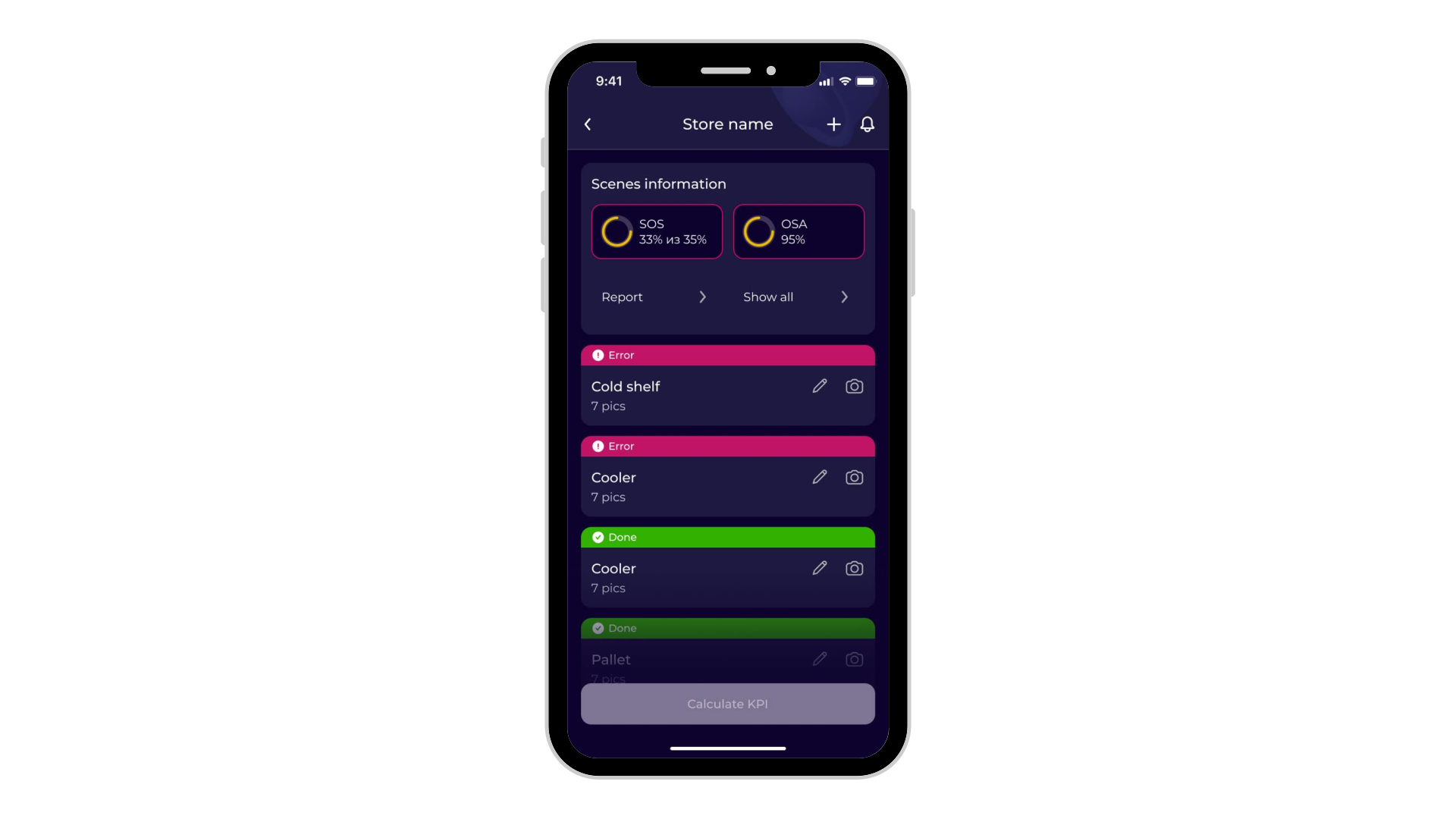
In a significant highlight, panelists delved into the tangible outcomes of the collaborative project between SmartMerch and Carlsberg Group. The ‘Share of Shelf Solution’ by SmartMerch emerged as a linchpin, overhauling traditional store audit methodologies.

Through its application, businesses can now adeptly oversee integral KPIs, execute instantaneous price analyses, and thereby, make informed, data-driven decisions that resonate with market demands. The workshop, with its potent blend of expert insights and actionable strategies, promises to be a catalyst for change, driving the retail sector towards unparalleled growth and optimization in the Asian market.

Back to news & insights
Blog

AI Solutions for Shelf Management and Deep Consumer Insights

In the era of digital transformation, Fast-Moving Consumer Goods (FMCG) companies face challenges ranging from intense competition to the need for efficient retail space management. AI-powered technologies offer retailers opportunities to automate merchandising, enhance shelf monitoring, and gain valuable insights into consumer behavior. This article explores how AIdriven image recognition is revolutionizing the FMCG sector by improving retail space management and enriching the consumer experience.

AI in FMCG: A New Perspective on Retail Space Management

AI-based image recognition technology enables real-time analysis of store shelf photographs, acting as an ever-vigilant employee who misses no detail. Key advantages include:

  • Automated Shelf Monitoring: Systems instantly detect out-of-stock items, misplacements, or pricing errors.
  • Reduction of Stockouts: Studies indicate that out-of-stock situations can cost up to 4% of annual sales. AI helps respond promptly to minimize these losses.
  • Planogram Compliance: Image analysis compared with approved planograms ensures adherence to merchandising standards, potentially boosting sales.

These capabilities simplify retail space management and lay the foundation for further merchandising automation in FMCG.

Enhancing Shelf Monitoring: A Key to Sales Growth

Effective product display management is crucial for retail success. Manual shelf audits are time-consuming and prone to human error. AI solutions, such as those offered by SmartMerch, enable:

  • Real-Time Monitoring: Continuous shelf scanning promptly identifies missing items or placement errors, enhancing stock replenishment responsiveness.
  • Planogram Optimization: AI assesses actual product placement against approved planograms, automatically recording violations, allowing swift adjustments that can increase sales by up to 20%, according to research.
  • Cost Reduction: Process automation reduces quality control expenses and costs associated with improper product placement.

Deep Analytics for Understanding Consumer Behavior

Beyond shelf monitoring, AI-powered image recognition provides valuable data on consumer interactions with products, enabling companies to:

  • Analyze Consumer Behavior: Understanding which products are frequently chosen, time spent in front of displays, and unnoticed items helps optimize placement and assortment.
  • Personalize Offers: Segmenting customers based on real data facilitates tailored promotions, enhancing loyalty and encouraging repeat purchases.
  • Forecast Demand: Integrating consumer behavior data with sales history allows more accurate demand forecasting and procurement planning.

These analytical tools play a crucial role in enhancing merchandising efficiency, enabling FMCG companies to make data-driven decisions.

Advantages of Implementing AI Solutions in Retail

Utilizing AI technologies in retail space management and merchandising offers several benefits:

  • Process Acceleration: Automation significantly reduces time spent on shelf inspections, allowing swift responses to changes.
  • Increased Accuracy: Eliminating human error improves control quality and reduces operational costs.
  • Integration with ERP and BI Systems: Combining AI solutions with existing analytics systems provides a comprehensive view of store operations, facilitating timely strategy adjustments.
  • Sales Growth: Improved shelf monitoring and enhanced service levels directly impact sales growth and customer satisfaction.

Challenges and Solutions

Like any innovative technology, AI-powered image recognition presents specific challenges:

  • Image Quality: Proper system functionality requires high-quality visual content, potentially necessitating additional equipment investment.
  • Integration with Existing Systems: For small and medium retailers, integrating new solutions with current IT infrastructure can be complex.
  • Privacy Compliance: Data collection and processing require strict adherence to personal data protection regulations, such as GDPR.

However, these challenges can be overcome by starting with pilot projects, gradually expanding technology use, and collaborating with reputable solution providers like SmartMerch.

Future Prospects: The Role of AI in FMCG

The future of the FMCG industry is closely linked to the continued development of AI technologies. Emerging areas like edge computing and augmented reality promise to further enhance analysis speed and accuracy. On-site data processing (edge computing) will reduce latency, while AR solutions will allow staff to visually monitor displays and planograms.

These innovations will enable FMCG companies to not only optimize current processes but also set new standards in retail space management, providing a competitive edge in a challenging market.

AI-powered image recognition is becoming an indispensable tool for FMCG companies aiming to enhance retail space management efficiency and improve the consumer experience. Implementing such technologies allows for automated shelf monitoring, planogram optimization, and deep insights into consumer behavior.

Contact us to learn more about advanced merchandising automation solutions. Investing in AI technologies today lays the foundation for a successful business tomorrow.

Back to news & insights
Blog

One of Our First Clients: The BORJOMI Success Story with SM Visor

BORJOMI, a globally recognized brand, was among the very first companies to start working with us. For the past seven years, they’ve been using our SM Visor system to monitor product presence and compliance across retail locations. We invited Alexey Ivanov, IT Product Manager at the company’s Information Technology Department, to share his experience with SM Visor and reflect on our collaboration.

Initially, the field agents’ work in stores was extremely time-consuming, and their reports often lacked accuracy. Merchandisers recorded shelf data manually, making it impossible to verify the information in real time. A major challenge was the ease with which agents could manipulate or falsify data — and unfortunately, many did. Technically, auditors could be sent for spot checks, but when operations cover the entire territory of Russia, such an approach becomes unmanageable. Verifying the work of thousands of agents would require enormous resources.

This pushed us to look for technology-driven solutions that could help address these issues and ultimately improve performance metrics.

Around that time, we came across emerging recognition systems designed to optimize agent behavior at the point of sale. Naturally, we were intrigued. We started by piloting an international system. However, after testing, we had serious doubts. Working with a foreign provider meant paying in foreign currency and dealing with a very rigid structure. Any request for a custom feature required lengthy negotiations and documentation — with no guarantee our needs would be met.

So we turned our attention to domestic providers. We launched a tender and began reviewing local solutions.

Among the participants was a newly launched company, SmartMerch. Their CEO, Maksim Arkhipenkov, impressed us with his confidence in the product. At the time, SmartMerch didn’t have contracts with major clients and couldn’t showcase any success stories. What they had was the product itself — SM Visor. But once we tested it, we realized: this was exactly what we needed.

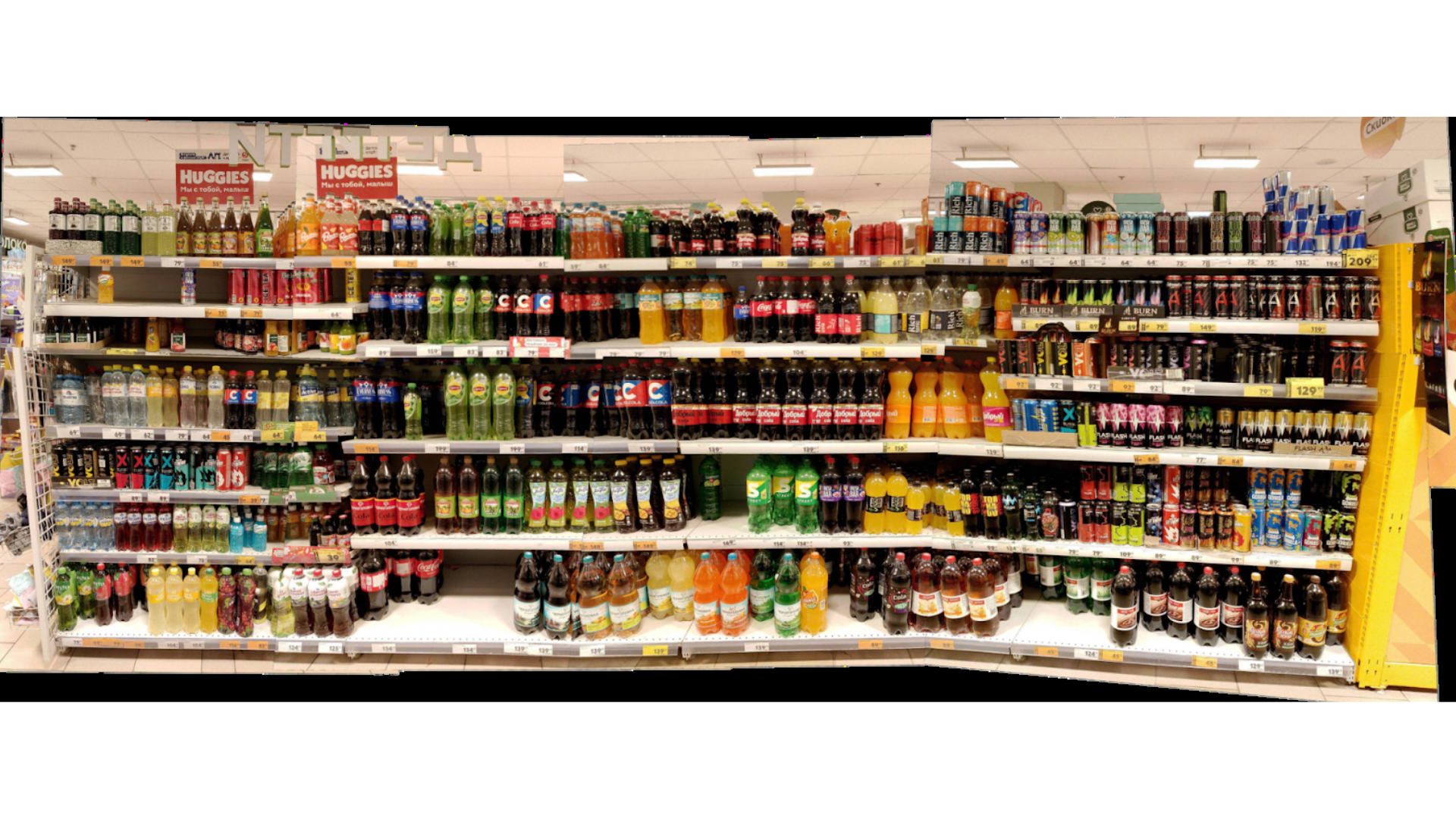
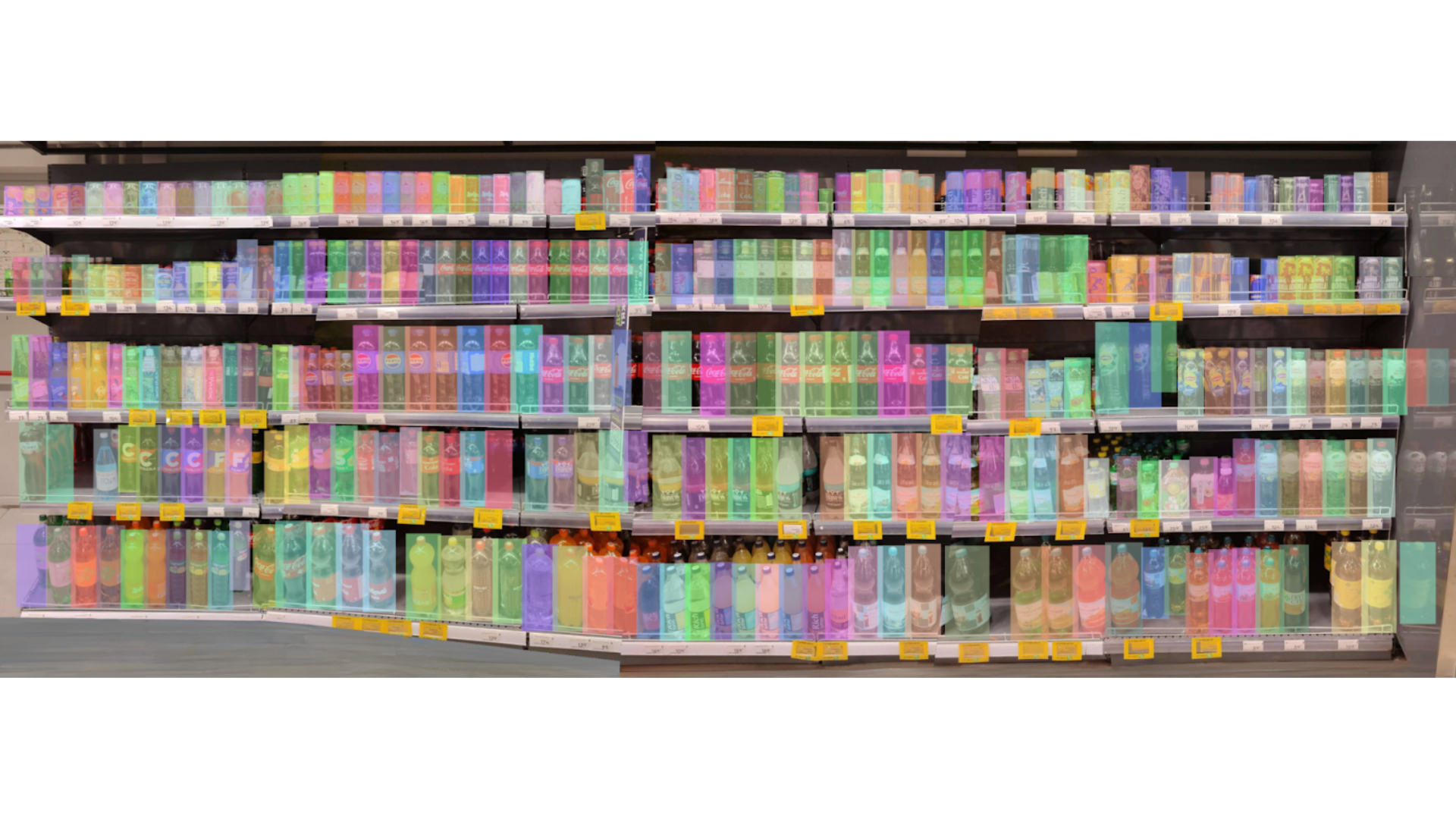
The key feature that set SM Visor apart from other systems was its image stitching capability. This allows agents to take multiple photos that the system then combines into a panoramic “realogram.” Competing systems lacked this feature, leaving room for fraud — for example, agents could upload the same photo multiple times, pretending to have covered an entire shelf. SM Visor eliminated this risk by making such manipulation impossible.

In the end, unique functionality mattered more than case studies or big names. We signed a contract and launched a three-month pilot.

Artur Markaryan, CPO at SmartMerch:

Our deep expertise in the FMCG sector allows us to clearly identify the core challenges our clients face and to build our products around their business needs and each individual user — not just around tools. We were the first on the computer vision market to introduce photo stitching because we understood that both we and our partners needed to see the entire shelf. This provides not only a clear view of product placement, KPI compliance, and competitor presence, but also offers a reliable check on the performance of our system itself.

Our mission goes beyond building a product — we aim to ensure data accuracy and reliability. Today, SM Visor is not just a service — it’s a strategic instrument. The data it provides supports everything from KPI setting and performance tracking to promo campaign planning, production decisions, and commercial negotiations. Without SM Visor, companies simply don’t see the full picture at retail — which leads to inefficient resource allocation, wasted promotional budgets, and weak positioning in negotiations.

We cannot afford to let unreliable data undermine our clients’ business performance. That’s why our mission is to fully eliminate the human factor from data collection and ensure its integrity.

Transparency is the key to effective decision-making, and SM Visor delivers it through a powerful suite of automated tools. At the same time, we go far beyond just one product. Today, the SmartMerch portfolio includes nine solutions — from production defect detection to a unique chatbot that performs mathematical calculations and searches through corporate knowledge bases, as well as an advanced SFA system featuring planogram compliance and in-visit KPI guidance.

During the pilot phase, we visited retail locations together with our field agents, took photos, and monitored how accurately the system processed them. We had to travel to virtually every region to conduct in-person training and demonstrate how to photograph shelves correctly so that SM Visor could recognize products and return accurate data.

While the system’s functionality was easy to grasp, we initially encountered some resistance from merchandisers. Many of them, unfamiliar with recognition technology, complained that it was inconvenient or “didn’t work.” However, we could clearly see that visit durations were decreasing and that the speed of data collection — and, as a result, decision-making — was increasing. In that context, agent complaints became less significant. After all, people often react skeptically to major changes at first.

We frequently received messages from merchandisers claiming the system was malfunctioning, refusing to start, or simply not working. But when we arrived to investigate, everything would suddenly be functioning normally. We suspect that in some cases, these complaints were a cover for attempted fraud — some employees, having become used to a lack of oversight, were simply trying to simulate work instead of actually doing it.

We began noticing the key benefits of SM Visor as early as the pilot phase — and those early results played a decisive role in our decision to move forward with full-scale implementation.

1. Faster Processes. With the help of the recognition system, each agent can now visit significantly more stores. For example, if previously an agent could cover 10 stores a day, now they can easily visit 15. Knowing that their work is being monitored in real time through their mobile devices, agents are more focused and no longer waste hours on the job.

    Supervisor efficiency has also improved. Previously, they would spend up to 60% of their time reviewing shelf photos and providing delayed feedback to merchandisers. Now, the system analyzes the photos automatically and flags issues — all the supervisor needs to do is focus on improving shelf execution.

    2. More Constructive Dialogue with Supervisors. In the past, whenever data inaccuracies were flagged, the usual response would be that the agent had simply “forgotten to check a box,” while the shelves were supposedly fine. Many supervisors defended their agents because they were personally invested in keeping performance metrics high. With SM Visor, that’s no longer possible: if a product is missing from the shelf photo, it simply wasn’t there — no more excuses or data manipulation.

    3. Fact-Based Conversations with Retail Chains. When discussing assortment compliance or trying to understand why a product is missing from shelves, it’s difficult to rely on questionable data. A product might be missing due to breakage, delivery failure, or other issues — but without real-time insights, it was all speculation. Now we have concrete, up-to-date information about what’s happening in each store.

    These data also help us plan assortment and restocking more precisely, as we can track which SKUs are in demand at each location.

    Another important feature is the system’s ability to detect price tags — or their absence. This detail significantly affects sales: many shoppers won’t purchase a product if the price isn’t visible. Previously, checking price tags meant manually going through every photo. Now, SM Visor does it automatically — and that’s a real game-changer.

    4. Real-Time Data and Faster Decision-Making. Before, we’d get data with a one-week delay. Now, everything is available within minutes. Our decision-making speed has increased by 30–40% on average. We can instantly see what’s happening at each point of sale and take action — even calling a regional manager immediately if needed. What used to take three weeks — verifying reports, confirming data accuracy, escalating issues — now takes just a few clicks. The right data is in front of us, right when we need it.

    We’ve been working with SmartMerch for seven years now, and we haven’t found another solution worth switching to. Beyond all the functional advantages, what we value most is their flexibility and customer-centric mindset. We don’t have to go through endless rounds of approvals just to, say, change the color of a button — updates are implemented quickly.

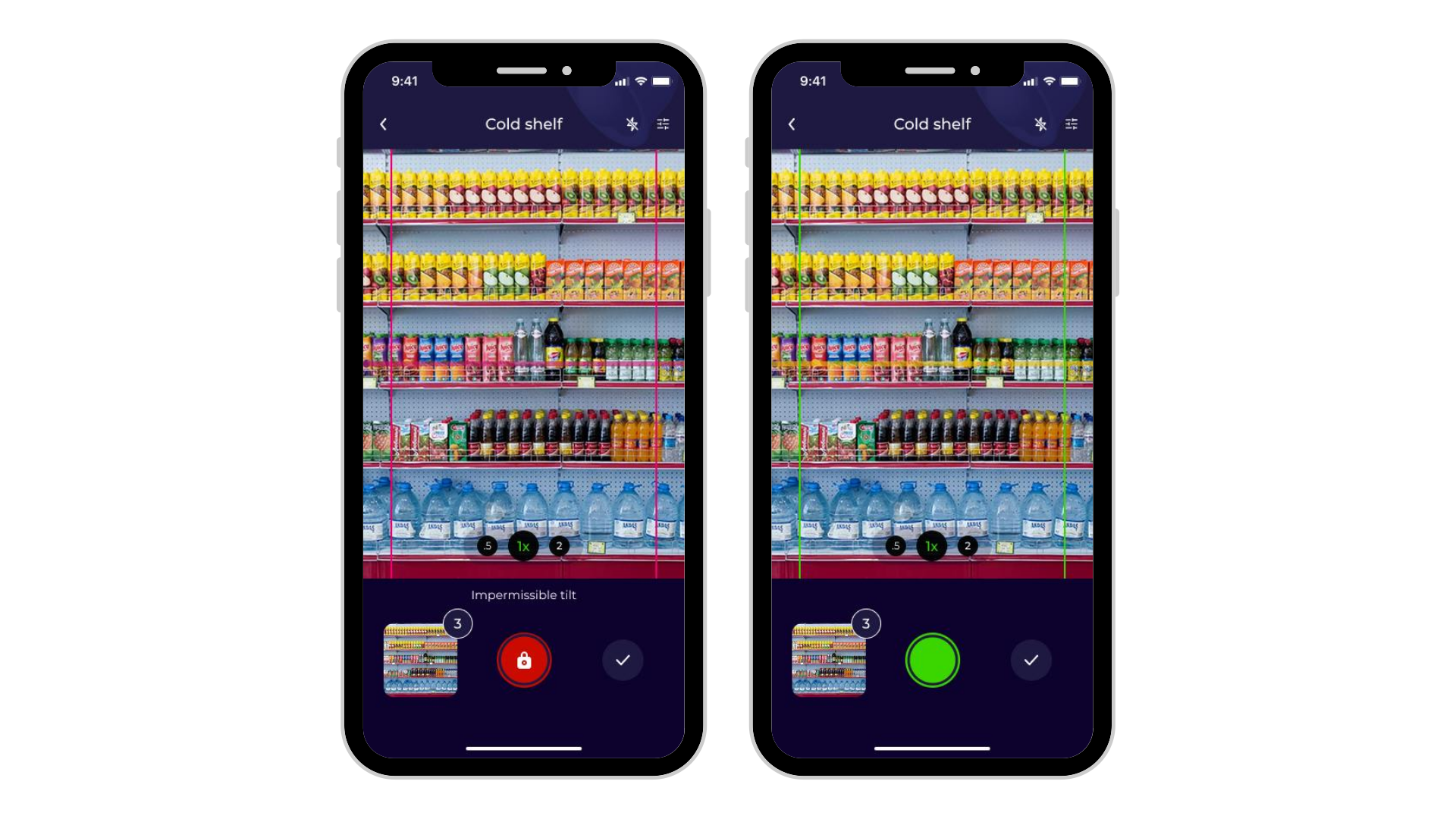
    We know that whatever request we bring to SmartMerch, they’ll help us make it happen. For example, they developed a flagging system specifically for us that evaluates the quality of shelf photos — whether they’re cropped, if an agent has tried to cover part of the shelf with a dark cloth (yes, that has happened), and so on. This system significantly reduces fraud risks and ensures that photos are good enough for accurate recognition.

    At our request, additional features were also added over time — such as shelf gap detection, simultaneous recognition of two categories (like water and soft drinks), and equipment type identification (e.g., rack, refrigerator, etc.). Step by step, we reduced both the risk of fraud and the likelihood of recognition errors. In the end, we arrived at a product that fully meets all our operational needs.

    Another major advantage is the system’s minimal technical requirements. SM Visor doesn’t require any special equipment — it runs smoothly even on standard, budget-friendly smartphones. This allows us to optimize costs and avoid unnecessary tech investments.

    When we first implemented SM Visor, our goals were purely financial and business-driven. Not only did we meet those goals — we surpassed them. The optimization brought about a real shift in our corporate environment. Employees became more focused and disciplined, with a clear orientation toward results. And thanks to transparent performance data, we’re now able to evaluate their efforts objectively.

    Today, with this system fully integrated into our daily operations, it’s hard to imagine how we used to manage without it — spending millions of man-hours on routine, repetitive tasks. It feels like we’ve left behind a kind of digital Stone Age — and we have no desire to go back.

    Back to news & insights
    Blog

    Reputation Over Advertising: How SmartMerch Grew Without a Marketing Budget

    SmartMerch has been present on the B2B IT solutions market since 2016, offering products in business analytics and process automation. Over the years, we’ve never launched flashy ad campaigns or invested in aggressive marketing strategies. We’ve kept a relatively low media profile, and yet, we’ve consistently had a steady stream of clients.

    How is that possible? Our Commercial Director, Alexey Moiseenko, shares the approach.

    “There’s a common stereotype that launching a new product means immediately pouring money into ads and going viral just to get customers. I suggest a different perspective.”

    In the tech industry, especially in fields like business process automation, visual data analytics, or SKU recognition, launching a product is never the end of the journey — it’s the beginning of real-world testing. Even the best ideas require validation through use in live environments, constant improvement, and flexible adaptation to a client’s business reality.

    At the early stages, it’s normal not to fully understand the market or the actual pain points of your target audience. Promising too much too early can backfire and lead to reputational risks. And without proper methodology or risk analysis in place, attracting a flood of clients right away might do more harm than good.

    Instead of going big on advertising, focus on finding 2–3 early adopters willing to pilot your solution. This small group allows for objective feedback while keeping risk and workload manageable. Ideally, these clients should be respected professionals in their industry — the kind whose recommendations carry weight.

    Be transparent about the product’s current stage, offer flexible pricing or additional value, and in return, ask for feedback, references, and the right to share their success stories publicly.

    1. Transparency – Be honest about where your product stands.
    2. Consistency – Deliver on your promises and timelines.
    3. Innovation – Offer a genuinely fresh solution, not just a copy of what’s already out there.

    Those first projects are crucial. How you perform will define your brand perception. At SmartMerch, our early collaborations — such as projects in retail digitalization and production analytics — helped us polish our solution and develop deep expertise in real-world implementation.

    Clients value thoughtful execution, a deep understanding of their challenges, and visible improvements. No technology, however innovative, can replace the need for relevance and real impact.

    Once your product has been validated through several successful implementations, you’re ready to scale. You now understand your audience, can predict costs and timelines, and know how to deploy the solution efficiently.

    If your early-stage clients were satisfied and vocal about their experience, you’ll start seeing inbound interest. This is how reputation-based marketing works in B2B: clients come not because they saw a banner ad, but because trusted peers recommended your solution.

    And once you have success stories and refined products, you can amplify your voice through blog posts, interviews, events, and thought leadership, without relying on aggressive marketing tactics.

    Reputation-first growth may seem slower and riskier than a classic marketing campaign, but we believe it’s more sustainable. Today’s clients are skeptical of slogans and promises — they want proof, results, and trust.

    At SmartMerch, we focus on building products with real impact, establishing partnerships based on mutual respect, and creating an ecosystem around each solution.
    This approach — rooted in quality and transparency — has helped us grow steadily and earn client trust for nearly a decade.

    Back to news & insights
    Blog

    AI Solutions in Retail 2026–2027: What Will Define the Success of Your Store Network

    Why the Next Two Years Will Be a Turning Point for Retail

    Retailers are operating in an environment where customer expectations are rising faster than business margins. That leaves little room for hesitation when it comes to technology transformation. Artificial intelligence has become one of the most powerful forces reshaping how the industry engages with customers, designs products, and runs operations. According to IBM Institute for Business Value, the next two years will be especially critical for the sector.

    The decisions retail leaders make about AI in 2026 and 2027 will affect more than competitive advantage. They will determine how effectively brands can meet the needs of customers who have already integrated AI into everyday life – using it to make decisions, navigate product choices, and shape preferences about how and where to shop. Consumers are changing faster than many companies can adapt.

    The industry needs a clear, practical action strategy. Research data points to areas where AI is already delivering measurable impact – and where retailers should focus to unlock real business value. Companies that act with intent today will set the standards tomorrow. Those who wait risk discovering that the pace has already been set without them.

    AI Is No Longer an IT Tool – It’s a Business Strategy

    One of IBM’s most significant findings is the shift in where AI investments come from. By 2027, 35% of total AI spending is expected to sit outside IT budgets, up from 28% in 2025. At the same time, AI spending within IT budgets is also growing – from under 10% of annual IT budgets today to 13% by 2027. This signals an important industry shift: AI has become a business decision, not just a technology initiative.

    Merchandising teams increasingly fund AI to improve product discovery and optimize shelf execution. Marketing teams deploy AI to personalize content and offers. Supply chain leaders use AI for demand forecasting and exception management. As investment moves beyond traditional silos, it reflects a broader organizational shift toward operationalizing AI across the enterprise.

    The research shows that 80% of retail and consumer goods companies now have a long-term AI innovation strategy. This underscores that AI is no longer framed as a side experiment, but as a core growth engine. The 2026–2027 investment window represents an inflection point: AI spend is moving from experimenting with tools to building capabilities required to compete in a market shaped by real-time decisioning, demanding customer expectations, and new forms of digital commerce.

    The Data Problem: Retail Has Information, but It’s Not Used Effectively

    Retail has always relied on data to understand customers, yet much of that data remains underutilized. According to the research, 64% of companies say their proprietary data is accessible for AI, but only 49% of that data is actually usable. Moreover, only 26% of data is currently used to train AI models. This gap represents a major growth opportunity.

    Unlocking proprietary data is one of the most critical components of an AI strategy for 2026–2027, because the performance of high-value AI use cases – whether personalization, inventory optimization, or forecasting – depends on data quality and accessibility. Retail has an advantage: the industry has historically collected rich, high-volume customer and transaction data. As data becomes cleaner, better governed, and more connected, the downstream value of AI rises sharply across everything from customer experience to operations.

    Customers are already feeling the impact. 58% of executives report that AI improves retention and satisfaction, and over the past year AI has contributed to an average 31% improvement in these metrics. In a loyalty-driven industry, that’s significant. High-quality data from points of sale, shelves, warehouses, and online channels becomes the fuel for AI systems that can predict shopper behavior and optimize supply chains in real time.

    Companies that invest in structuring, cleaning, and integrating data now will gain a competitive edge in the coming years. For example, SmartMerch’s SM Visor automatically captures shelf execution data using computer vision, turning unstructured visual inputs into accurate decision-grade analytics. This enables retailers not just to collect information, but to make it a usable asset for AI models.

    From Analytics to Action: Autonomous AI Agents in Retail

    AI’s role in retail is shifting from advisory to action-oriented. Research indicates that 84% of executives expect AI to significantly improve their ability to respond quickly to market shocks and changing customer needs. But the most transformative shift is not just speed – it’s AI’s ability to take action within complex workflows.

    Agentic and autonomous AI systems already manage multi-step processes: coordinating inventory, personalizing offers, and guiding customers through complex purchase decisions. According to the data, 76% of executives are transforming their business models to use AI not only to drive efficiency, but to create new revenue streams. This marks a move from passive analytics to active delegation of tasks to AI.

    This action-driven shift is becoming a defining characteristic of retail transformation over the next two years. Organizations that build the foundation for agentic AI in 2026 will be better positioned to improve customer experience and capture new value by 2027. AI agents will be able to make decisions within defined parameters – from automated replenishment to dynamic pricing based on demand and competition.

    A compelling example is Al Futtaim Group’s Blue platform, where an AI engine integrates loyalty, payments, and purchases into a single customer journey. Shoppers can instantly earn and redeem points across categories, browse products frictionlessly, and complete transactions in one flow. This demonstrates the impact of AI orchestration combined with human oversight – technology coordinates, while people add context and strategy.

    AI + Humans = The New Standard for Retail Customer Experience

    The research clearly shows that AI augments rather than replaces human roles. AI agents increasingly take on repetitive, multi-step processes across the value chain – connecting inventory, payments, logistics, and customer data – while employees step in where judgment, empathy, and brand trust are required.

    This model frees frontline assistants and service teams to focus on higher-value interactions and complex customer needs. Executives report that AI delivers the most value in marketing, customer service, supply chain operations, and digital commerce – areas where operational precision intersects with human connection. The result is a hybrid operating model where AI manages complexity and humans strengthen what makes retail uniquely human.

    For example, SmartMerch AI chatbots for field teams automate routine merchandiser tasks – planogram checks, product information retrieval, and report submission. This enables agents to concentrate on real work in stores: high-quality shelf execution, building relationships with store staff, and handling exceptions. Technology removes administrative load; humans bring expertise and flexibility.

    This approach is especially relevant for FMCG, where operational speed is high but execution quality depends on details. AI handles scale and speed; people ensure accuracy and adaptability. Companies adopting this hybrid model now are building a foundation for durable growth in an era where both technology and the human factor are critical for success.

    The Ecosystem Approach: Why Isolated Solutions No Longer Work

    The research also highlights the growing importance of ecosystems in retail. AI can be truly transformative only when tools, partners, platforms, and agents work together securely and seamlessly. Autonomous AI cannot reach its potential inside fragmented systems. Isolated solutions create barriers to data sharing, slow decision-making, and limit scalability.

    To prepare for this shift, retailers need to modernize commerce platforms, rethink processes for non-linear customer journeys, and strengthen data governance. When AI systems can understand and act across the business, retailers can orchestrate customer experience holistically rather than through isolated touchpoints. A shopper who starts in a mobile app, continues in-store, and finishes through customer support should receive consistent, personalized service at every step.

    That’s why ecosystem integration sits at the center of the 2026–2027 AI agenda. The future belongs to retailers who can coordinate intelligence across the full value chain, not only within individual functions. This requires not just deploying new technologies, but changing the architecture of the IT landscape – from disconnected systems to unified platforms capable of real-time data exchange.

    SmartMerch designs solutions with this principle in mind: its products integrate with existing accounting systems, ERP, CRM, and analytics platforms. For instance, SM Visor shelf data can automatically feed into inventory management, trigger replenishment orders, and update demand forecasts. This approach eliminates manual work, reduces errors, and enables AI models to operate on up-to-date, complete information from all sources.

    Three Steps Retailers Should Take Right Now

    The analysis points to three areas retail leaders can focus on to accelerate progress in AI transformation. These steps do not require radical change, but they create the foundation for sustainable growth and competitive advantage in the coming years. Each lever is grounded in real capabilities available today and can be implemented incrementally without disrupting core business processes.

    1) Deploy hyper-personalization based on secure first-party customer data

    Personalization has long been standard in retail, but AI-driven hyper-personalization takes it to the next level. It means adapting every element of the customer journey based on behavioral data, preferences, and real-time context – from product recommendations to communication channels and pricing offers. The key condition is using first-party customer data with strong privacy and security.

    Deploy AI in high-impact processes such as order-to-cash and supply chain orchestration. Ensure AI tools reflect your brand truth – even when customers interact through external AI assistants like voice assistants or third-party chatbots. Data must be structured so AI can extract insights and act without losing context. This is especially critical for FMCG, where purchase decisions are fast and loyalty is built through consistent experience.

    2) Automate critical operational tasks with AI

    Make product information accessible and AI-friendly. Start by automating repetitive operational tasks, then expand AI’s role as trust grows – both with customers and internal teams. Conversational commerce is becoming the standard: shoppers expect to ask questions in natural language and get accurate, relevant answers instantly.

    Examples include shelf compliance monitoring, inventory checks, promotion management, and planogram compliance. SmartMerch’s SM Visor uses computer vision for real-time shelf monitoring: it recognizes SKUs, detects out-of-stocks, verifies planogram compliance, and sends alerts to merchandising teams. This removes the need for manual audits, reduces lost sales from empty shelves, and frees employees for strategic work.

    Automation also applies to managing field teams: AI chatbots can answer agents’ questions in real time, provide access to knowledge bases, and help complete reports. This is especially valuable for distributed teams across many stores, where coordination and information access are essential for efficiency.

    3) Orchestrate collaboration between AI agents and business systems through an ecosystem

    Break down silos between departments. Connect business systems so AI agents can coordinate work across functions – from procurement to marketing, from logistics to customer service. Ensure AI recommendations and transactions remain secure, accurate, and aligned with your brand values. This requires not only technical integration but organizational change: teams must be ready to work with AI as a colleague, not just a tool.

    AI agent coordination is especially important in complex scenarios like omnichannel promotion management. For example, AI can analyze promotion performance in real time based on POS data, adjust inventory recommendations through WMS integration, and simultaneously optimize content across digital channels based on customer response. Such orchestration is impossible without a unified ecosystem where data flows freely and securely between systems.

    SmartMerch builds products with this principle in mind: its solutions integrate easily with ERP, CRM, analytics platforms, and category management systems. This enables retailers to adopt AI gradually – without replacing their entire infrastructure – while gaining the benefits of automation and intelligent process orchestration.

    The Gap Between Leaders and Laggards Will Grow Faster Than Ever

    In retail, every click, basket, and conversation matters – and AI amplifies the best of what makes the industry human. Over the next two years, the gap will widen between retailers who use AI to fundamentally rethink how they operate and those who treat it as just another layer of technology. The defining difference will come down to clear decisions about data foundations, operating models, and where AI is allowed to act autonomously.

    Strengthening these foundations now is shaping the next era of retail productivity. Companies investing in data quality, system integration, and workforce enablement for AI will gain an advantage not only in efficiency, but in their ability to adapt quickly to market change. This is especially relevant for Russia and the CIS, where retail digitalization is accelerating and competition for customers is intensifying each quarter.

    The opportunity ahead is significant – and very real. Retailers who act with intent today will help define what “good” looks like tomorrow. Those who wait may find the pace has already been set by competitors who started earlier. Delaying AI transformation now is not merely a missed opportunity – it’s a strategic risk that can cost market share and customer loyalty in the coming years.

    How SmartMerch Helps Retailers Prepare for AI Transformation Today

    SmartMerch offers a suite of AI solutions designed specifically for retail and FMCG. The company’s products cover the key AI transformation directions highlighted in the IBM research – from automating operations to building ecosystem integration and enabling hyper-personalized customer experience. Importantly, SmartMerch implementations are phased, without needing to halt business operations or fully replace existing IT infrastructure.

    SM Visor automates shelf execution management using computer vision and SKU recognition. In real time, it verifies planogram compliance, detects out-of-stocks, monitors promo material quality, and collects analytics-ready data. This eliminates manual audits and turns visual shelf data into structured inputs for AI models, which can be used for demand forecasting and inventory optimization.

    SmartMerch AI chatbots give field teams instant access to corporate data in natural language. Merchandisers can ask questions about products, planograms, and promotions and receive precise answers without calling headquarters or searching through documents. This accelerates execution in stores and reduces back-office load, enabling teams to focus on strategic tasks.

    SM Camera provides remote monitoring of refrigeration equipment and temperature compliance using AI. The system prevents spoilage, reduces operational risk, and enables centralized control of a distributed equipment fleet. This is especially critical for short shelf-life products and strict storage requirements.

    All SmartMerch solutions integrate with existing accounting systems, ERP, CRM, and analytics platforms – creating a unified ecosystem where data circulates freely and AI can coordinate processes across departments. The company offers a step-by-step rollout approach: from a pilot in a few locations to scaling across a national network. This enables retailers to start AI transformation with minimal risk and prove business value before full deployment.